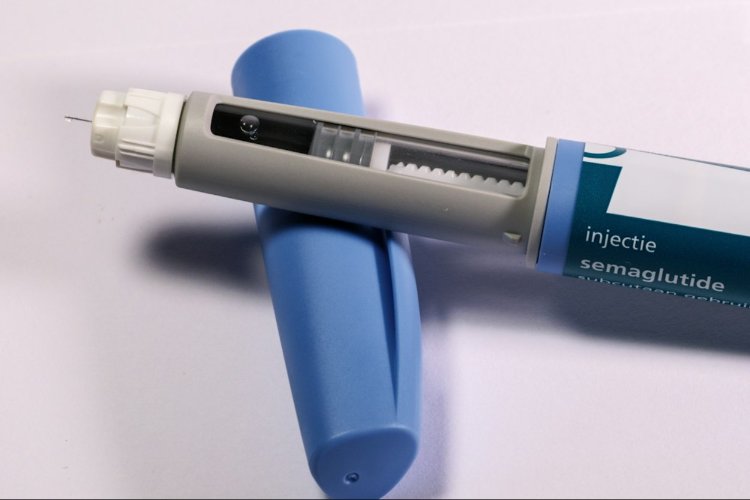
You’ve lost the weight. Now you’re thinking about stopping, because of cost, side effects, a supply problem or because you’ve reached your goal. The big question: will it all come back?
What the research shows
In the main semaglutide trial, people who stopped after 68 weeks regained about two-thirds of the weight they’d lost within a year (Wilding et al., 2022). Improvements in blood pressure, blood sugar and cholesterol also drifted back. It’s a similar story with tirzepatide (Mounjaro): in the SURMOUNT-4 trial, people switched to placebo after 36 weeks regained about 14% of their body weight over the following year, while those who stayed on it kept losing (Aronne et al., 2024).
That’s biology, not a reflection of you or your effort. Weight loss triggers biological changes, more hunger and a slower metabolism, that push weight back up. When the medication stops, the appetite brake comes off.
But regain isn’t inevitable for everyone. The habits you build while on the medication make a real difference.
1. Start preparing while you’re still on it
The medication quietens your appetite. That’s the best time to practise habits you’ll need when it returns: regular meals, protein at every meal, plenty of vegetables and fibre, and a plan for evenings and weekends.
2. Protect your muscle
Muscle helps keep your metabolism up and makes weight easier to maintain. If you’ve lost muscle along with fat, regain is more likely to be fat. Prioritise protein and strength training now. See how to protect your muscle on weight loss injections.
3. Come off gradually, with your prescriber
Don’t just stop. Talk to your prescriber about tapering the dose, so your appetite returns in steps you can manage rather than all at once.
4. Eat for fullness
When hunger comes back, build meals that keep you full for longer:
- Protein at every meal: eggs, yoghurt, fish, chicken, beans
- High-fibre carbs: oats, wholegrains, potatoes with skins, beans and lentils
- Lots of vegetables for volume
- Fewer ultra-processed snacks, which are easy to overeat
5. Watch the early warning signs
Weigh yourself weekly. If you regain 2 to 3 kg, act early rather than waiting. Small corrections are much easier than starting again.
6. Get support
People who keep weight off long term usually have support and accountability. That’s what our six-month programme is built for. If diets have never stuck for you, read why you can’t stick to a diet.
Try this
Pick one habit to make automatic now, such as a protein-rich breakfast. New habits take on average around 66 days to become automatic, so starting early helps.
Source: Lally et al., 2010, European Journal of Social Psychology
Free guide
Download our free guide, Eating well on GLP-1 medication, for practical advice on eating, muscle, side effects and planning for life after the injections: download the guide (PDF).
Book a GLP-1 consultation · Related: What to eat on Ozempic or Mounjaro when you have no appetite
Free tool
GLP-1 Muscle Check
Three minutes, six evidence-based measures and a protein target built for weight loss. See how well you are protecting your muscle on Ozempic, Wegovy or Mounjaro.
Take the Muscle CheckPractical take-home messages
- Some regain after stopping is common. It’s biology, not failure.
- Build habits while you’re still on the medication.
- Protect muscle with protein and strength training.
- Taper with your prescriber rather than stopping suddenly.
- Weigh weekly and act early on a 2 to 3 kg regain.
References
- Wilding JPH et al. Weight regain and cardiometabolic effects after withdrawal of semaglutide: the STEP 1 trial extension. Diabetes Obes Metab. 2022;24(8):1553-1564. Link
- Aronne LJ et al. Continued treatment with tirzepatide for maintenance of weight reduction in adults with obesity: the SURMOUNT-4 randomized clinical trial. JAMA. 2024;331(1):38-48. Link
- Lally P et al. How are habits formed. Eur J Soc Psychol. 2010;40(6):998-1009.
Prefer to listen? Evan covers this on the Fuel Better Podcast: How to navigate your appetite.
Written by Evan Lynch, RD, MSc, CORU-registered dietitian (DI052470) and founder of Southeast Nutrition Clinic. Evan works with people across a wide range of conditions, from GLP-1 support and gut health to Olympic finalists and GAA players, in Clonmel and online.
Not sure where to start? Book a free 20-minute call, book a consultation or join the six-month programme.
This article is general information, not medical advice. If you have a medical condition or take medication, speak to your GP or dietitian before making changes.