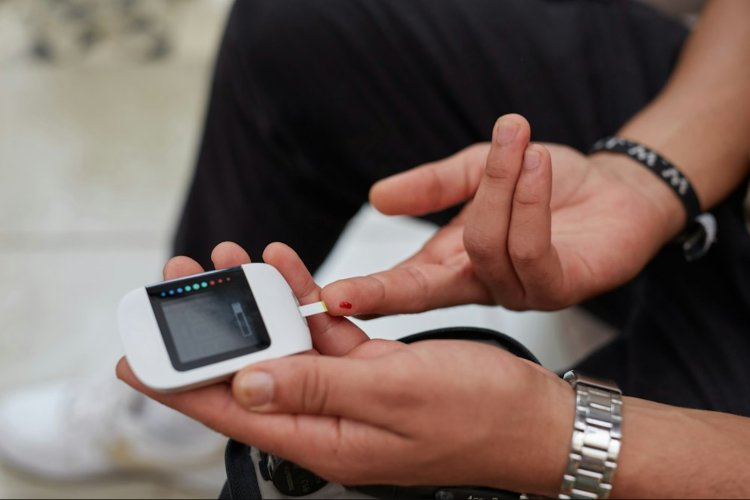
Your GP rang with your bloods. Your sugar is “a bit high”. Not diabetes, but prediabetes. Maybe you were handed a leaflet, maybe just told to “watch the sugar”.
Here’s the reassuring part. The HSE describes prediabetes as very treatable, and type 2 diabetes can often be prevented or delayed. In the pilot of the HSE’s own prevention programme, half of participants had blood sugar back in the normal range after a year (HSE, 2023).
Food is one of the most powerful tools you have. Here’s where we start.
What prediabetes means
Prediabetes means your blood glucose is higher than normal, but not high enough to be diagnosed as type 2 diabetes. It also raises your risk of heart disease. Your GP usually finds it through a blood test called HbA1c, which reflects your average blood sugar over the past two to three months.
1. Build a balanced plate
A simple starting point for lunch and dinner:
- Half your plate: vegetables or salad
- A quarter: protein, like fish, chicken, eggs, beans or lentils
- A quarter: wholegrain or high-fibre carbohydrate, like brown rice, wholegrain bread, oats or potatoes with skins
You don’t need to cut out carbohydrates. The type and amount matter more.
2. Choose carbs that release slowly
Wholegrain bread instead of white, porridge oats instead of sugary cereal, beans and lentils, fruit instead of juice. Fibre slows how fast sugar enters your blood and keeps you full for longer.
3. Cut down on sugary drinks first
Fizzy drinks, juices, smoothies and sweetened coffees can add a lot of sugar with very little effort. Switching to water, sparkling water or diet versions is often the single quickest win.
4. Don’t skip meals
Skipping breakfast or going long gaps often leads to large, carb-heavy meals later. Regular meals keep things steadier.
5. Move, especially after meals
A 10 to 15 minute walk after eating helps your muscles use glucose. The HSE also recommends being more active and cutting down on long periods of sitting.
6. Lose some weight, if you need to
You don’t need to reach a “perfect” weight. For many people, a modest loss makes a meaningful difference to blood sugar. In the landmark US Diabetes Prevention Program, losing about 7% of body weight with more activity cut the risk of developing type 2 diabetes by 58% (Knowler et al., 2002). If diets haven’t worked for you before, read why you can’t stick to a diet, and what to do instead.
Keep your check-ups
Keep up the blood tests your GP or practice nurse recommends, so you can see your progress. Ask your GP about the HSE’s free Diabetes Prevention Programme too.
Try this
Take a 10 to 15 minute walk after your biggest meal today. Short post-meal walks lower the rise in blood sugar after eating.
When to see a dietitian
If you want a plan built around your food, your schedule and your numbers, a registered dietitian can help you make changes that last, without giving up everything you enjoy. We also help with cholesterol and blood pressure, which often travel with prediabetes.
Learn more about our diabetes and prediabetes service. No GP referral needed. Bring your recent bloods if you have them.
Book a prediabetes consultation or book a free 20-minute call.
Want a plan that fits your life? Our dietitians can turn this into something practical for you, in Clonmel or online. Appointments are usually available within a week.
Practical take-home messages
- Prediabetes is common and often reversible.
- Build a balanced plate: half veg, a quarter protein, a quarter high-fibre carbs.
- Swap sugary drinks first.
- Walk for 10 to 15 minutes after your main meal.
- A 5 to 7% weight loss, if needed, makes a big difference.
References
- Knowler WC et al. Reduction in the incidence of type 2 diabetes with lifestyle intervention or metformin. N Engl J Med. 2002;346(6):393-403. Link
- HSE. Diabetes Prevention Programme Evaluation Report 2023 (pilot phase 2021-2022). Link
- Buffey AJ et al. The acute effects of interrupting prolonged sitting time in adults with standing and light-intensity walking on biomarkers of cardiometabolic health: a systematic review and meta-analysis. Sports Med. 2022;52(8):1765-1787. Link
Written by Evan Lynch, RD, MSc, CORU-registered dietitian (DI052470) and founder of Southeast Nutrition Clinic. Evan works with people across a wide range of conditions, from GLP-1 support and gut health to Olympic finalists and GAA players, in Clonmel and online.
Not sure where to start? Book a free 20-minute call, book a consultation or join the six-month programme.
This article is general information, not medical advice. If you have a medical condition or take medication, speak to your GP or dietitian before making changes.